When We Steal the Spotlight from God

alexander-dummer-aS4Duj2j7r4-unsplash

When I was entering junior high, my mom bought me a book I found irrelevant and a little rude. Although I don’t remember the title, it would be hard to forget such a cheesy cover illustration—a smug-looking teen girl with a cartoon planet Earth orbiting her head. The point of the book—and the message my mom wished to convey—came across clearly: Don’t think and act like the world revolves around you.

Although younger generations often are accused of self-centeredness, we’re all guilty at any age. An adult who talks incessantly about his or her achievements or problems is just as absorbed in their own affairs as a tyrannical toddler who calls everything “mine.”

As with my mother, the sins I see in my children—wanting to get their way all the time, and expecting others to cater to their demands—are a proximate illustration of my own egotism. In matters such as parenting, or even minor inconveniences like hitting all red lights when I’m in a hurry, I expect my will to be done and throw a grown-up temper tantrum when it’s not.

When I think and act according to my pleasure instead of God’s glory, I elevate myself above my creator. It’s both sinful and absurd, like a clay pot trying to commandeer the potter’s ceramic studio.

Read full article at Gospel-Centered Discipleship.

[Photo courtesy Alexander Dummer on Unsplash]

Surrendering ‘Supposed to’

adoption loss orphan grief grace surrender

Guest post by Christy Britton

Through this past year of writing more and contributing to different websites, God has given me an unforeseen blessing of forming friendships with other writers. (Yes, as surprising as it seems, it’s possible to develop genuine relationships through social media channels pervaded by fake or misleading content.) One of my dearest friends is Christy Britton, whom I consider a faith and writing mentor. She is also a boy mom to four biological sons and shares my love for adoption, a passion which led her to pursue adopting a young girl in Uganda.

Her story breaks my heart. Things didn’t go as she’d hoped. The plan that was supposed to bring another child into the family never came to fruition. Yet even in deep pain and loss, she kept loving her daughter and her heavenly father who had brought them together as a family. She continues to grieve with open arms, submitting her shattered expectations to our good and holy God.

It’s a tremendous honor to share her story through her own words, and to honor the life of her daughter, Gracious. I pray this will accomplish what I know is her desire: to uplift others who are hurting, and encourage us all to turn our sorrows over to our Savior.

++++++++++

“It wasn’t supposed to be this way.”

Have you ever said these words? Thought them? I suspect I’m not the only one. We all experience circumstances not of our choosing, situations that don’t go the way we want or expect.

Our supposed to’s may seem harmless, but they can easily become idols. If we’re clinging to our supposed to’s, we’re not clinging to Christ. When we prefer our own plans, we reject his. When we think we know better, we deny his wisdom and authority. We’re back to the garden. Like Eve, we think God is withholding something good from us, and we doubt his goodness.

There is tension between our wills and what our good father wills for us. There are gaps between our desires and his. In this tension is a sweet invitation to trust God. In each gap is an opportunity to release our grip on what we want and reach for what he offers.

I’m learning to let go of my own supposed to. Honestly, it’s a work in progress with much work to be done. I had a plan for my life. A good one that would have brought glory to God. I thought it was what God wanted for me, too. I was mistaken.

A trade-off
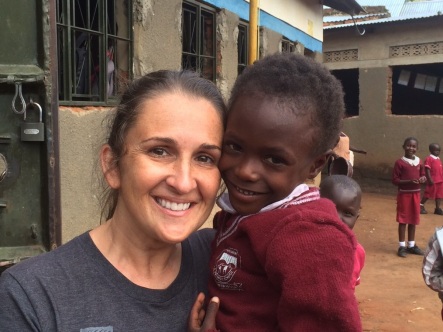
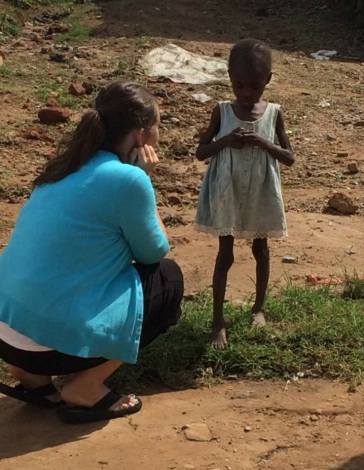
As an orphan advocate with 127 Worldwide, a nonprofit that partners with local leaders around the world caring for orphans and widows, I get to travel to Africa. Three years ago, I met Gracious, a little girl living in Uganda,  and immediately fell in love with her. My husband and I began to care for her as best we could from afar. We visited her, prayed for her, and made sure all her physical needs were met. After much prayer and wise counsel, we felt God stirring us to pursue her adoption.

While the adoption process was difficult and costly, we made our best effort to bring our girl home. After 18 months of paperwork, we were preparing to relocate to Uganda for the required one-year residency to complete her adoption. However, right before our scheduled flight, we received the news that our daughter had passed away.

She wasn’t supposed to die. She was supposed to be a Britton.

I’m supposed to be in Uganda right now. I’m supposed to be caring for my daughter.

These are my supposed to’s.

I wake up each morning with the temptation to give into the bitterness that comes from not getting my way. I wake up each morning to the reality that the plans I had will never come to fruition. Each morning begins with a dull pain that reminds me of what was supposed to be.

But do you know what else each morning begins with? New mercies (Lamentations 3:23). God is with me in each of these starts to my day offering fresh mercy. He holds his hand out to me.

Taking his hand forces me to release my grip on my supposed to’s. Holding onto him means letting go of the comfort and familiarity of my plans. God gives me himself, on his terms. He invites me to trade my supposed to’s for him.  

As beloved as I’ve built up my supposed to’s in my mind, he is better still. As good and holy as my plans are, his plans are better still.

Better vision
What about you? Do you live with the tension between what you think should be and what is? What “supposed to” do you need to release?

Maybe you, too, are missing the child you were supposed to raise. Perhaps you’re not in the job you’re supposed to have. Maybe you don’t look the way you’re supposed to look. You weren’t supposed to be sick; your best friend wasn’t supposed to move away; your marriage wasn’t supposed to be this hard.

These supposed to’s we hold onto must be let go in favor of something better – God’s will for our lives. He wholly offers himself to us, but wholly on his terms. He gives us a vision of himself, so we will turn our eyes away from lesser things.

Our father is not careless in what he withholds; he is purposeful. We may not understand the why, but we can trust the who.

Our God is for us (Romans 8:31). He is with us (Matthew 28:20). His plans are for our good (Jeremiah 29:11). He promises that we will share in his glory when we share in his sufferings. He offers life through his Son when we die to ourselves. Death is painful, and we should not expect to die to our wills without hurting.

What we can expect is that our temporary affliction is preparing for us eternal glory beyond all comparison (2 Corinthians 4:17). My affliction exists in the form of grief, in an unfulfilled longing. My day can easily get derailed at the sight of the empty chair at the dinner table. But I cling to the promise that afflictions don’t last forever. In heaven, all my longings will be satisfied in my Savior.

Take his hand
I want to want God more than I want anything else, including my supposed to’s. I look to Christ for motivation. His prayer in the Garden of Gethsemane before his crucifixion demonstrates the tension between what he wanted and what his father wanted.

“Father, if you are willing, remove this cup from me. Nevertheless, not my will, but yours, be done” (Luke 22:42).

Love caused him to release his own desires and submit to his father’s. Love for us. We were supposed to suffer God’s wrath. We were supposed to pay the penalty for our sins. But Christ died on the cross in our place. He paid the debt for our supposed to’s.

Jesus surrendered his will to the father so that we could be adopted into his family. As his children, will we not surrender our own wills to him? Will we refuse to let go of our precious plans? Our father who gave up his own beloved Son to secure our redemption can surely be trusted with the way our lives are supposed to go.

I don’t know what your supposed to’s are. But I do know that you can release and entrust them to a good father.

When you wake up and feel crushed under the weight of unfulfilled longings, reach for Christ. Take his hand and accept the new mercies he holds out to you. Live in this mercy. Ask him to transform your desires into longings for him. Allow your earthly disappointments to lead you to your father who always satisfies.

This is how your life is supposed to be lived.
ChristiandGraciousmeet

Christy Britton is a wife and homeschool mom of four biological sons. She is an orphan advocate for 127 Worldwide. She and her husband are covenant members at Imago Dei Church in Raleigh, NC. She loves reading, discipleship, Cajun food, spending time in Africa, hospitality, and LSU football. She writes for several blogs, including her own, www.beneedywell.com.

The Shunammite Woman: Faith in God’s Life-giving Power

A short story in the Old Testament tells how a simple woman with a generous heart grew in faith after witnessing God work a miracle in her life. God’s faithfulness to his word led her to boldly request another miracle later on, as she faced the uncertainty of death and loss. Her intensified conviction provides hope that God can mature the smallest mustard seed of faith in those who seek after him, even for chronic doubters like me.

We learn about this woman in 2 Kings 4, which chronicles events that happened early in the prophet Elisha’s ministry. During his frequent travels, Elisha often passed through the small village of Shunem, where the woman lived with her husband in a large, empty house. She invited the prophet over to eat every time he came by, and eventually asked her husband if they could set up a small room where the holy man of God could rest.

Elisha stayed and, in gratitude for her hospitality, asked his servant how he could repay her. The servant mentioned she didn’t have a son, and her husband was too old for them to bear children. Learning this, Elisha delivered shocking news: The following year, she would hold a son in her arms. Her response is reminiscent of Sarah’s incredulity when God promised her and Abraham a son: “No, my lord, O man of God; do not lie to your servant” (2 Kgs 4:16). She couldn’t believe it, because it was impossible.

Read full article at Morning by Morning.

Every New Beginning Comes from Some Other Beginning’s End

element5-digital-352049-unsplash

It’s here. A day I’ve been simultaneously dreading and anticipating. The first day in a chain of revolutions that will repeat and progress, accelerating toward spinoff.

Both my sons are now attending school full-time. They’re still under my care, still living at home. I hope to always represent home to them.

But they’ve grown up. Those wings they’ve so desperately wanted to spread unhindered are getting airtime. They get to expand their minds and explore new terrain, spending a good portion of their day learning from others. They’ll gain skills, make mistakes, help and be helped by friends, mature into men of wisdom and integrity, all without me present. I don’t have to supervise, referee, lecture, defend, or nag them ’round the clock.

Each of us is ready for the change.

Firsts and lasts
Going to school is exciting, as many firsts are. First words, first steps, first time sleeping in a big boy bed. Each new action precipitates wonder and possibility. We love celebrating all that’s new.

A first also necessarily brings a last. If something new is coming, something old must pass. You quit a job to start a new one. You dump singlehood status to enter into marital bliss. You leave home to move away to college. You drop your youngest baby off to his first day of kindergarten and end your role as an all-day caregiver.

It’s the end – not of the world, not of life as I know it. Some call it the changing of a season, or closing of a chapter. I’m calling it death.

That phase of scheduling my day around meals, naps, playdates, bathroom stops; of whipping out wipes like a gunslinger when a cup inevitably spills; of trips to the library and park and loathsome grocery store; of cozying up on the couch, reading away the afternoon; of losing my temper, again, and coming to them, sobbing, embracing them in sweet reconciliation – it’s done. I can remember, but not bring it back. That stage died.

Yes, of course, I’m being dramatic. No person died. My life isn’t ruined now that my kids are in school. My identity, though closely interlinked with my sons, doesn’t hinge on being a mom. I have a husband, for one thing. We like each other, and like doing activities together. I keep busy, invest in relationships and ministry, look for ways to create and connect. Better than all that, I know Jesus, and am known by him.

No, life isn’t over for me, even as a stay-at-home mom whose kids aren’t home all day, anymore. This next phase of parenting holds bright expectancy for joy. Yet I can’t deny, and don’t want to suppress, the real grief over the ending of an era.

It’s OK to be sad that I’ll miss it.

Mourning dust
That’s life for ya – an inexorable series of deaths and resurrections. It’s the circle that moves us all, if we’re to believe the philosophy espoused by The Lion King. From a tree centered in a garden to a tree staked in a skull-shaped hill, the cycle repeated throughout biblical times, and continues ad infinitum today. Like a line from a ’90s pop rock favorite of mine, “Closing Time,” copping a quote from Stoic philosopher Seneca, the world echoes:

Every new beginning comes from some other beginning’s end.

Endings come in waves – through a flood, across a tumbling wall, in a veil torn apart; by winter’s invasion and crushed dreams and relational doors slammed shut. Death never wins, though. Just as winter cedes to spring, so do ashes birth life. Jesus rose from the dead and raised us up with him, granting us a new home, new family, new richness in living for him.

If death is merely a vehicle to greater life, why do we loathe it? Victors in Christ have nothing to fear; he defeated condemnation. At some point, you’d think we’d get used to it, the cyclical pattern of dust to dust.

Yet when the dust is beloved, and it flits away, accessible only by reminiscence, we cry. The end of something is the loss of something, and those left behind are made losers.

God has made us for eternity, and we crave its permanence. Even in small shifts from one season to the next, we feel the pains of labor, groaning along with creation for ultimate restoration – when all will truly be well. Our bodies of dust are continuously handed death in order to unveil resurrection.

Every passage of an age shows us greater glory awaits, and weighs on us in the meantime.

Paradox united
I recently read my boys a chapter from a children’s devotional that whacked me with irony.

“When Stars Die” explains how those big balls of gas eventually peter out, shrivel up, and soak in massive energy until they explode in a jaw-dropping supernova. The author compared this phenomenon to Christ’s death on the cross, and how it was both a horrible tragedy and beautiful spectacle of grace.

This paradox will never cease to amaze me. I doubt I’ll fully grasp the depth of the gospel mystery this side of heaven. Why would the only Perfect Person die to save a thoroughly imperfect me?

Only God knows.

I see him now, but dimly. I thought I knew him, but am just now awakening to how all of life points to Christ – the small and momentous ways that recite his miraculous narrative. Moments like saying goodbye to my youngest at his first day of kindergarten display a necessary death that initiates joy unfolding. It’s exciting and hard, as you’d expect any birth to be.

All the emotions that accompany the birth/death cycle – tears of anguish and rapture for arrivals and homegoings – coexist at the cross. Life doesn’t spin in futility. We have a Savior who secured a future without pain, fear, or sorrow, and who stays in us and with us, renewing our hope for the unseen.

We were buried therefore with him by baptism into death, in order that, just as Christ was raised from the dead by the glory of the Father, we too might walk in newness of life. ~ (Romans 6:4)

There’s a carpet unrolling before me, leading to new life ahead. Sure, it’s just one goodbye in a series of beginnings and endings that will repeat all the days I’m alive. Yet this one small goodbye reminds me that death’s next of kin is birth, and weeping for joy and grief can be exhaled within the same breath.

I’m sitting here, typing this, crying because I miss my baby; glad because we’re being reborn.

Image courtesy Element5 Digital on Unsplash.

Resurrecting Buried Treasure

lilian-dibbern-GX1Dz9cZHc0-unsplash

Hidden torments sometimes yield tragedy. The world witnessed this earlier this summer when, within a week’s span, we lost two luminaries to suicide, fashion designer Kate Spade and celebrity chef Anthony Bourdain. I hate it whenever I hear that someone chose to end his or her life; it breaks me up thinking about their pain and remembering my own darkness of anxiety, currently held at bay.

The media coverage of these losses was grossly sensationalized, and I tried to avoid most of it except for a USA Today article by CNN analyst Kirsten Powers.

Powers admits to having considered suicide at one point, and explains the results of research she conducted examining the epidemic of depression in America. Citing an interview with Jim Carrey, she suggests one reason why more people are battling despair:

If only we get that big raise, or a new house or have children we will finally be happy. But we won’t. In fact, as Carrey points out, in many ways achieving all your goals provides the opposite of fulfillment: It lays bare the truth that there is nothing you can purchase, possess or achieve that will make you feel fulfilled over the long term.

Read full article at Fathom Magazine.

[Photo courtesy Lilian Dibbern on Unsplash.]