Hope of the New Year

As I grew up ringing in the New Year with my family, I wondered, but never asked, why January 1st is considered a holiday. When your parents let you stay up and watch TV way past bedtime, you keep your mouth shut and let the good times roll.

Now that I’m an adult and have children of my own pleading their case for late-night privileges, the tradition of celebrating the flip of the calendar has piqued my curiosity once again. Seeing commercials for New Year’s programs and store end caps already stocked with fireworks and noisemakers reminds me of my long-held questions: What’s so special about the start of another year? Why do people around the world hail its arrival with feasts and proposals, kissing and crooning a Scots poem? Besides providing an excuse to party, why do we celebrate the New Year?

A quick search at history.com reveals its origins, dating back four millennia to the ancient Babylonians who observed the first new moon after the vernal equinox (a day in late March when the amount of sunlight and darkness is equal) as the beginning of a new year. The date kicked off an epic eleven-day religious celebration called Akitu, which involved feasts and rituals celebrating the Babylonian sky god Marduk’s victory over the evil sea goddess, Tiamat. Later, Emperor Julius Caesar introduced the Julian calendar, similar to the modern Gregorian calendar used by most countries around the world today. Caesar at that time declared January 1 as the first day of the year in honor of Janus, the Roman god of beginnings, who had two faces allowing him to look back on the past and forward to the future.

One common thread runs throughout the history of New Year celebrations, from the time of the Babylonians and Romans celebrating and making sacrifices to their gods to our modern rituals of making resolutions and watching a giant bright ball drop at midnight. These New Year traditions we observe and pass on to future generations glorify hope. Though we can’t know what circumstances the next year holds, we rejoice in the possibility of good things to come. The potential for blessings flutters a blank sheet before us, tempting us with irresistible freshness. We grasp for it, convinced that this unknown unraveling of time will be better than what’s already transpired, and what’s ahead will finally make us happy.

Read full article at Morning by Morning.

How a Birth Mother’s Choice Is an Illustration of the Gospel

aditya-romansa-5zp0jym2w9M-unsplash

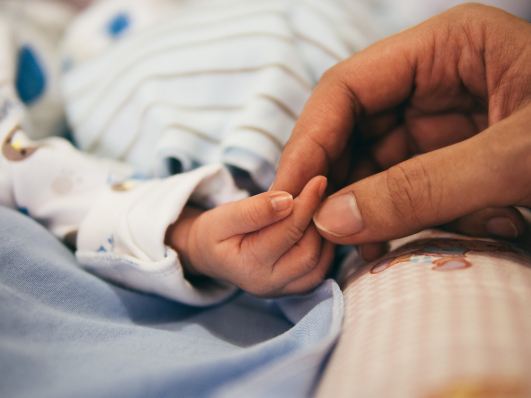
It’s an odd experience, shaking hands with the mother of your son before you get a chance to hold him. My pulse was racing when my husband and I sat down in the adoption agency office to chat with the woman who was changing our lives at great cost to her own.

“Good to meet you,” she’d said, smiling warmly in a way that would become familiar, reflected in our son’s cheerful face. Later, I tried to consider the anxiety she might’ve felt walking into that room. She had more reasons to be scared than I did, but she didn’t act flustered. Maybe she’d bathed in the same inexplicable peace that had washed over me halfway through our meeting. All at once, I sensed this moment as a God-ordained melding of families birthed from different brands of labor pains.

My husband and I had embarked on the adoption path after years of struggling to conceive. In the midst of our grief, God reawakened our desire to adopt, an idea he had planted early in marriage before we discovered our fertility issues. We set out expectant and hopeful, yet wary of the potential for further heartache.

Though my husband and I chose adoption as a way to grow our family, the choice of who would become our child rested on the will of another woman. This mother faced the shock of an unexpected pregnancy, endured the labor and delivery process, and carried the weight of an agonizing decision about how to care for her child. Whereas we were left wondering when and how we’d have a baby, she had to ponder if she’d take her baby home or place him in someone else’s arms.

Read full article at ERLC.

[Photo courtesy Aditya Romansa on Unsplash]

Better than Batman

My house doubles as a functional living space and a superhero lair. Come over and you’ll find Batman, Spider-Man and any one of the Avengers battling foes on the stairs, under the kitchen table or wherever my sons last deserted them.

Superhero fascination isn’t restricted to elementary school boys. A genre that was once the domain of comic book geeks has risen to massive popularity in the entertainment and retail industries. Last year alone, the six live-action superhero films released raked in more than $4 billion in worldwide box office. From the movies we watch to the clothes we wear, the realm of superheroes has expanded to become a marketing cash cow and a culture unto itself.

Our captivation with powerful, otherworldly characters reveals a deeper spiritual truth about our basic human desire to be rescued. As objects of our admiration and fandom, superheroes promise us deliverance from trouble and supply inspiration for a better future. The line between fantasy and reality blurs into irrelevance as we latch onto these symbols of hope amidst adversity.

Read full article at Intersect Project

Why Adoption Isn’t Plan A or B

bonnie-kittle--f7bKsvOgwU-unsplash

Love, marriage, baby carriage—that’s the predictable course many couples follow to fulfill the cultural mandate in Genesis to “be fruitful and multiply.” Because procreation is a natural biological process that God designed, we expect our bodies to work as intended and assume the sequence will progress in the usual way.

But reproductive ability isn’t guaranteed. Our world is fallen, and sin affected the entire process of childbearing. Some couples can’t get pregnant; some miscarry or lose their babies in the womb. Their roads to parenthood meander and extend, with some diverging from the typical biological route.

When my husband and I began pursuing domestic infant adoption after several years of infertility, we mourned the loss of bearing children, but also rejoiced at the prospect of adding a child to our family through adoption. God sparked the desire to adopt early in our marriage, before we had problems trying to conceive. We didn’t view adoption as a second-rate method to grow our family, but rather appreciated it as a beautiful, redemptive way to bring us a child.

Though we received support from family and friends, we heard occasional comments insinuating that adoption was Plan B. The remarks implied that biological pregnancy was the preferred method for growing a family, and construed adoption as a subpar option left to those who otherwise couldn’t have children. A few couples we knew who were also facing infertility refused to consider adoption because they couldn’t imagine raising children that weren’t their biological offspring.

Deeper insight into the adoption process can help clarify the misperception that adoption is inferior to “having your own kids.” As parents who welcomed our first child through adoption, we jump at the opportunity to explain how God unfolded his plan for giving us this undeserved gift.

Read full article at ERLC.

[Photo courtesy Bonnie Kittle on Unsplash]

See the Life, Share the Loss

silvestri-matteo-L3fpHBSg8ms-unsplash (1).jpg

Some texts stop you in your tracks: “Doctor said we’re losing the baby.”

Time halts; shock assails. This shouldn’t be happening. Life should be growing. I don’t want her to go through this.

As much as you hurt for her, you know what she’s feeling is worse.

I’ve walked with many women through the devastation of miscarriage and infant loss. Though similar to infertility, and sometimes occurring after long seasons of delayed fertility, it’s a unique grief. Life is cut short. A mother won’t know her child outside the womb, this side of heaven.

Sometimes, she has to go through the entire labor and delivery process, only to come home empty-handed. No matter how early the loss starts, she’ll bear the physical signs of death. Blood sheds; hormones revolt. Joy of new life shatters.

It’s terrible.

Every woman copes with this loss differently. Some wish to grieve privately, while others choose to talk about their emotions so others can understand what they’re going through.

Every woman, when asked how others can help, answers with a similar plea: “Just acknowledge I lost my baby.”

Read full article at Women Encouraged.

[Photo courtesy Silvestri Matteo on Unsplash]